How to Plan a Commercial Photo Shoot for Your Business
Plan it backward. Start with what you need when it’s finished, then work backward to what has to happen to create it—not the other way around.
Skip that step, and you get the common version: book a photographer, pick a date, round up some employees, then halfway through realize the website needs horizontal banners, social needs vertical crops, three people aren’t actually available that day, and video would’ve been useful. Every one of those discoveries changes the production. Catching them beforehand is the whole job of planning.
Start with the actual objective
“We need new photos for our website” isn’t specific enough to plan around. Which pages? Does the homepage need a big horizontal hero shot? Do service pages need different images? Do you need employee portraits for the About page? The clearer the requirement, the easier the shot list.
Know where the images will run — before the shoot, not after
A website banner needs horizontal space. Instagram wants vertical. A print ad needs room for a headline and logo. If I know that going in, I can shoot the same setup both ways in a few extra minutes on set. If you find out afterward, it’s often another production day.
Define deliverables, not just vibes
“Twenty photos for the website” and “twenty website photos plus fifty for social” are two different productions. Get specific enough to prioritize — if the schedule runs tight, you want to know which five images matter most before you’re standing on set deciding under pressure.
Build a shot list that says why, not just what
“Employees working” tells me nothing. “Two employees at a workstation — horizontal, website” tells me who, what, and where it’s going — which shapes composition and how much time it deserves. Mark primary and secondary shots so the production can flex without losing what matters most.
The shot list and the schedule aren’t the same thing
The list is what you need. The schedule is the order that actually gets it done — accounting for the executive who’s only free 10–11, the conference room that’s booked after lunch, the exterior that needs a specific angle of sun. A schedule that ignores those constraints turns into a day spent waiting, and waiting still counts as billed time.
Choosing studio, your own space, or a rented location
If your building, restaurant, or facility is part of your identity, shoot there — it gives the image real context. If the look you need doesn’t exist anywhere you can access, a rented location or studio may get you there faster than trying to force your actual space into something it isn’t. Every location change costs more than the drive — it’s packing, unloading, and rebuilding, which eats into the day’s actual shooting time.
If a location has real unknowns — power, light direction, space for gear — a quick scout beforehand is cheap insurance against finding out on shoot day with a full crew standing around.
Who needs to be in it
Employees when identity matters — it’s really them, which is the point. Professional models when the shot needs precise, repeatable performance. Either way, confirm availability before the day. Bringing eight employees in one at a time with no schedule means gaps while everyone else waits.
Wardrobe, hair, and makeup — decide before people arrive
Clothing choices affect the finished image more than people expect — colors that clash with your brand, patterns that read busy on camera, fit that changes between standing and sitting. Work this out in advance. Deciding what six people should wear on set means cameras and crew sit idle while you sort it out.
Same logic for hair and makeup: someone has to manage shine and flyaways over a long day. If no one owns it, the job still exists—it just lands on whoever’s closest.
Crew follows scope, not the other way around
Once the shot list, locations, and talent are set, the crew you need becomes obvious. A simple assignment might be one assistant and me. Add video, and you need a videographer. Add real creative complexity, and a creative or art director earns their place. The goal is never “biggest crew the budget allows” — it’s enough people that nobody’s doing three jobs at once and something important gets missed.
If photo and video are both happening, plan that from day one
Adding video mid-planning isn’t just a camera swap — it means sound, repeated actions, more time per setup. Shooting both together is efficient specifically because it’s planned that way from the start: same location, same wardrobe, same light, both cameras working from one schedule.
Give every setup real time
Moving one person to a nearby room takes minutes. Six wardrobe changes and a floor move take considerably longer. An 8-hour day doesn’t mean 8 hours of shooting — it means 8 hours in which everything the production needs has to happen, including lunch.
Decide who approves images on set
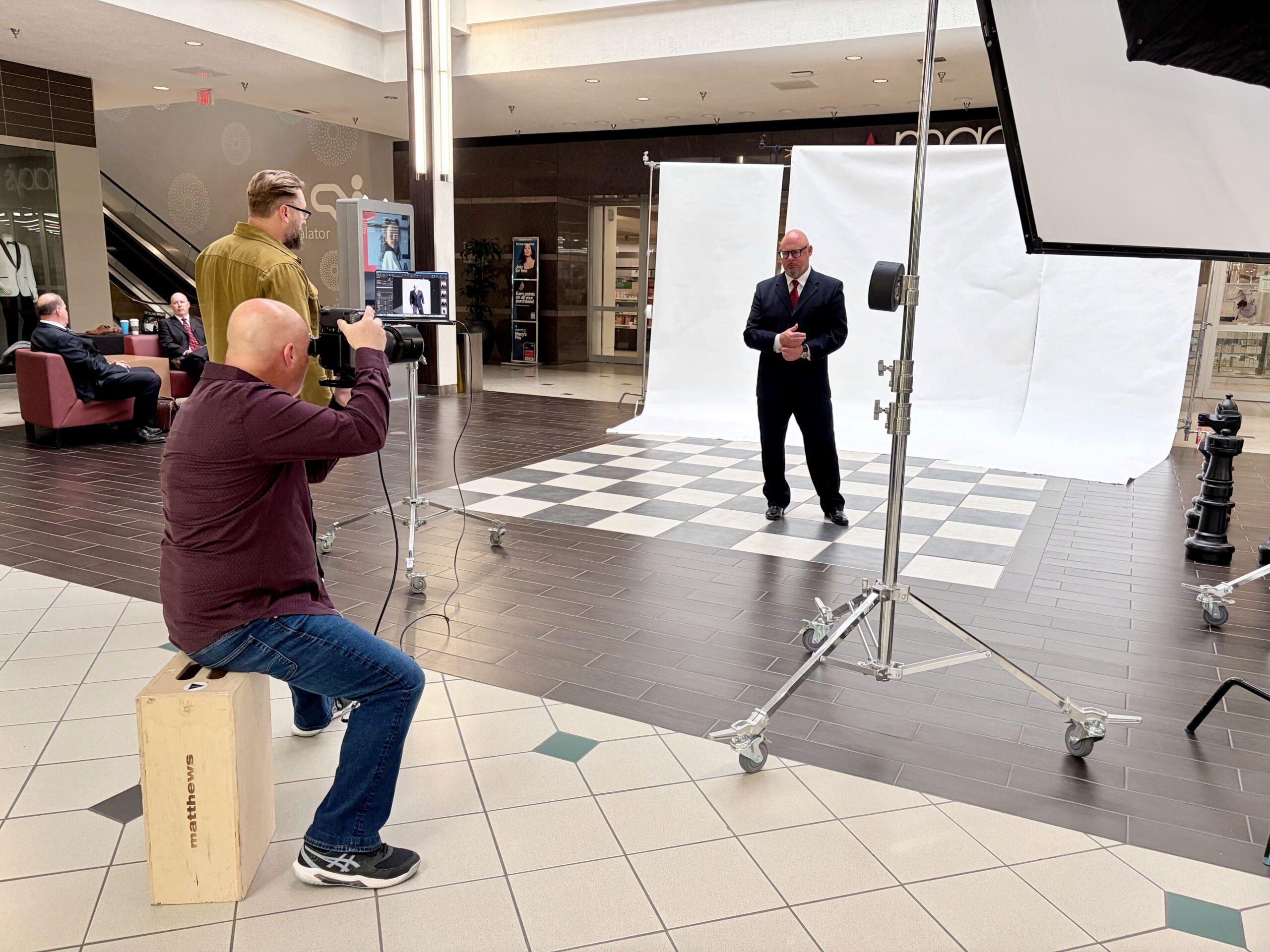
If nobody has clear sign-off authority, setups slow down while multiple people debate. Establish this before the day. On set, I shoot tethered, so whoever’s approving sees full-size images in real time — which means a fix can happen while the setup still exists, not in a follow-up email a week later.
Protecting the budget means deciding things early
A crew waiting on a missing product or an undecided wardrobe choice isn’t free — everyone’s clock is running, all at once. A fifteen-minute decision made two days early is fifteen minutes. Made on set with ten people standing around, it’s fifteen minutes times ten. That’s the real cost of skipping preproduction.
If the budget’s tight
Cut variables, not standards. Fewer locations, fewer wardrobe changes, fewer people — a smaller, well-executed set of images beats an ambitious list the day doesn’t have time for. If five images matter far more than another twenty, protect those five.
What to bring to a first conversation
You don’t need a finished shot list or crew plan. Just answers to:
- What are you promoting, and who’s the audience?
- Where will the images run?
- Stills, video, or both?
- When do you need it done?
- What’s your budget, if you have one?
The real planning question isn’t “what can we shoot in one day.” It’s “what does the business need when the day is over?”
