Why Do Some Portraits Feel More Natural Than Others?
Look at enough professional photos, and you start noticing the difference between two categories: photos where someone is clearly holding a pose, and photos where someone looks like they’re mid-conversation. The technical setup behind both can be nearly identical — same lighting, same camera, same location. What changes is what’s happening between the photographer and the subject in the moments the camera actually catches.
That difference is worth understanding before your session, because it explains why some headshots look stiff no matter how good the lighting is, and why others feel effortless even when the subject swore beforehand that they “freeze up on camera.”
Stillness isn’t the goal
Most of us learned to think of a portrait as something that requires standing perfectly still — school pictures, driver’s license photos, the family portrait where everyone had to stop moving until the shutter clicked. That instinct is understandable, and it’s also exactly what produces a stiff result. People aren’t naturally still. Some lean in when they’re interested. Some talk with their hands. Some pause before answering a question. Those habits are so automatic that the people who know you don’t consciously notice them — but they’re part of what makes you recognizable, and a portrait that eliminates them in favor of a fixed, formal pose ends up looking like a photo of a stranger wearing your face.
A natural-feeling portrait doesn’t fight that rhythm. It works with it.
Where the natural moments actually come from
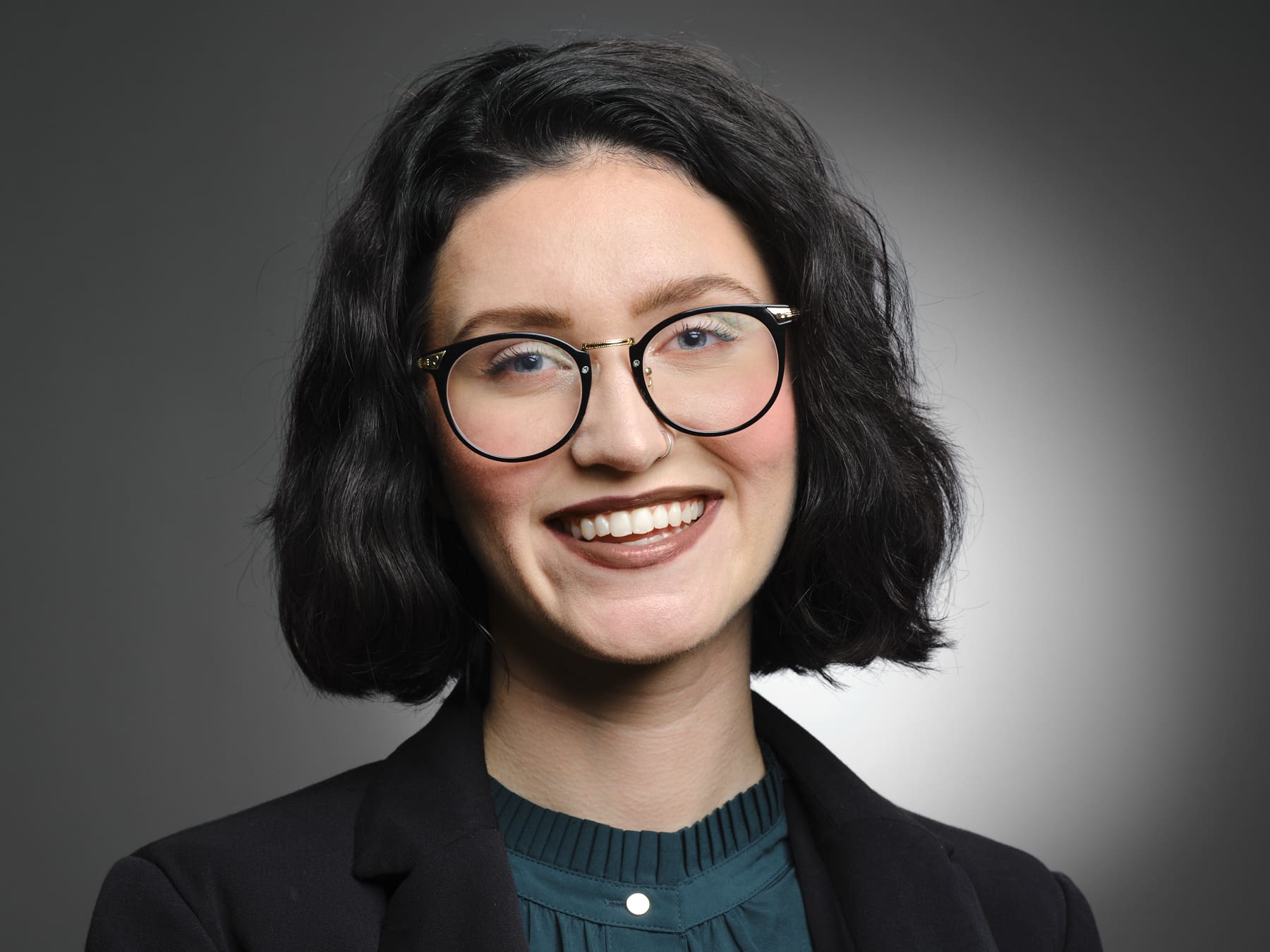
During a session, I’ll give direction — turn slightly, adjust your weight, angle toward the light. Those instructions matter, but they’re not where the best frames usually come from. The strongest images tend to happen in the small gap right after a direction, when someone settles back into themselves before the next instruction arrives. They react to something we were just talking about. They shift their weight without thinking. For a moment, they’re responding to the conversation instead of performing for the camera.
That’s not an accident I’m hoping for. That’s why the conversation matters as much as the technical setup. Talking about the business, the project, the reason the photos are needed — that’s what keeps someone’s attention off the camera long enough for their actual presence to show up instead of a manufactured one.
Why this produces a more credible photo, not just a more comfortable one
There’s a practical reason this matters beyond how the session feels: viewers can tell the difference. A forced smile and a genuine one activate different muscles around the eyes, and most people register that difference instinctively even if they couldn’t explain what tipped them off. A stiff, over-posed headshot doesn’t just look less pleasant — it reads as slightly less trustworthy, because it looks manufactured. A natural portrait reads as accurate, and accuracy is exactly what a professional headshot should deliver.
This is also why review matters during, not after, a session. Watching the images appear on a screen as we work lets both of us see immediately when a genuine expression happens versus when something still looks held. That feedback loop is part of how a natural-feeling result gets built — it’s not left to chance.
What this means for you going into a session
You don’t need to practice looking relaxed. That’s a contradiction — trying to look natural is itself a kind of performance, and it usually reads as one. What actually helps is understanding that the posing instructions you’ll hear are a starting point, not the finished photo. The moment right after you settle into a direction, mid-sentence, thinking about something other than the camera — that’s usually where the photo comes from, not the moment you’re holding the pose you were given.
The bottom line
A portrait feels natural when it captures a person’s actual rhythm instead of interrupting it for a formal stance. That’s not about a client’s comfort level walking in — some people talk right away, others take a few minutes to loosen up, and neither is wrong. It’s about a photographer who’s watching for the moment between the instructions, not just the instructions themselves. That’s where the photos that don’t look “taken” — the ones that look like they simply happened — actually come from.
